
There are stages to internal orgasms — from the early “light internal orgasm” to the full-body, convulsive “deep internal orgasm.”
The key to eliciting those deep internal orgasms is developing the portio.
At our women’s pleasure studio “Lips,” we receive many inquiries every day from women who want to experience internal orgasms or increase the intensity of their internal orgasmic pleasure.
I’m h-i, owner of Lips. Out of more than 500 women who have tried Lips’ sessions, more than 80% have learned to achieve ordinary internal orgasms. However, only about ten women — to the best of my knowledge — have reported reaching that white-out, convulsive, fainting-level deep internal orgasm.
Given we’ve worked with over 500 women on internal orgasm development and erogenous zone training, having only around ten reach that level shows how difficult it is to reach that depth of sensation.
If you’ve researched internal orgasms, you may already have heard the word “portio.” When the portio becomes an erogenous zone, you can experience internal orgasms more deeply and continuously. But the prerequisite is being able to experience internal orgasms at all — learning to have internal orgasms is not easy for women who currently cannot. Reaching a state of continuous intense orgasm by stimulating the portio is even harder.
On this page, drawing from my experience helping more than 500 women achieve internal orgasms at Lips, I — h-i, representative of Lips — explain step by step how to develop the portio into an erogenous zone.
This material may be challenging for women who currently cannot have internal orgasms. If you already can experience internal orgasms and want to aim for deeper pleasure, this guide should also be useful.
- Where the Portio Is & How to Find It
- Comprehensive Guide to Portio(Cervical Erogenous Zone) Development
- Understanding the Location and Getting Used to the Sensation
- Stimulation Techniques and How to Perceive Pleasure
- Relax, Take Your Time, and Enjoy
- Using a Dildo
- Using a Vibrator
- Understanding Your Own Portio Characteristics
- Incorporating Vaginal Training
- Finding a Partner Who Can Stimulate Your Portio(Cervical Erogenous Zone)
- Important Precautions for Portio(Cervical Erogenous Zone) Development
- Summary
Where the Portio Is & How to Find It
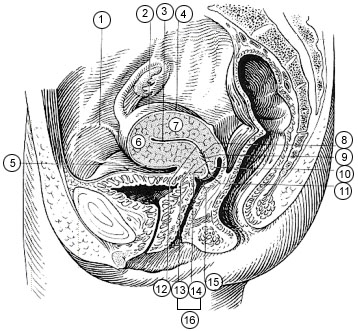
National Cancer Institute SEER Traing Modules1
First, check the portio’s location using the diagram above. The lower side of the diagram is the vaginal opening. The portio is the vaginal portion of the cervix. The position marked ⑭ in the image is the portio. The rounded area labeled ⑦ is the uterine body.
From the vaginal opening it sits quite deep, but from the uterine side it’s nearer the entrance — you can see how its relative position shifts depending on perspective. Viewed from the side, it looks like the diagram below.
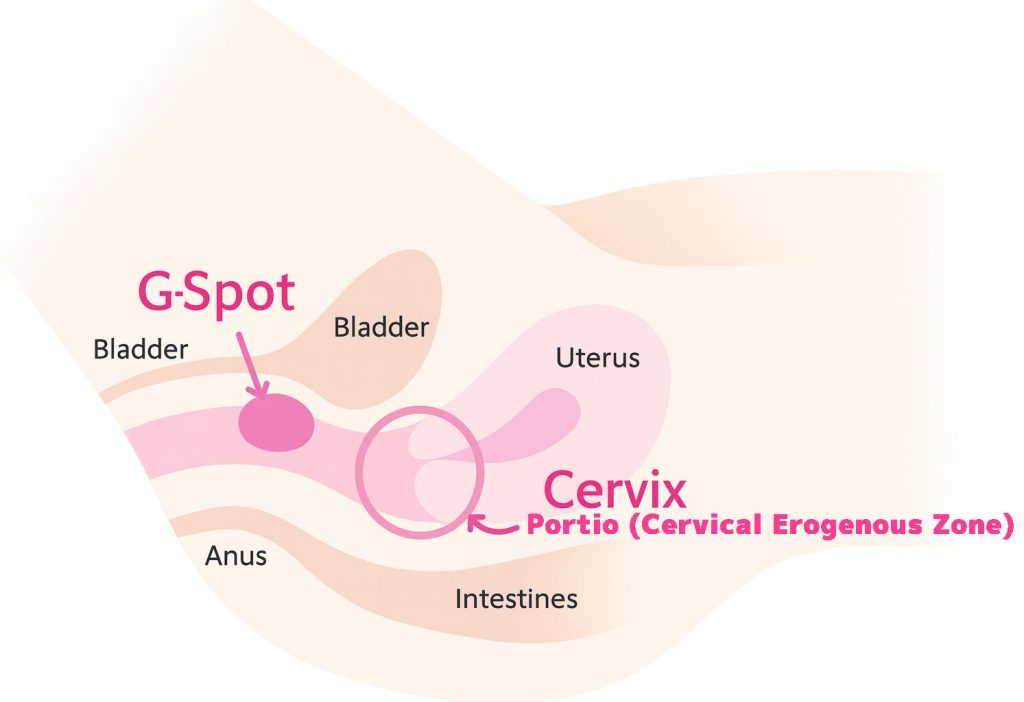
Because vaginal depth varies between individuals, the exact position of the portio also varies. Modern imaging studies indicate the average distance from the vaginal opening to the portio is roughly 7–10 cm.2
Keep in mind that sexual arousal and body position can change that distance slightly — on the order of about ±1 cm in some cases. As a clear sense of where the portio is, remember it’s located toward the deep end of the vagina (the cervical area).
Unlike the G-spot, which varies widely in location, the portio is generally found near the upper, deep end of the vaginal canal — usually close to the back wall. In many women it sits near the “dead end” area at the far end of the canal.

Compared with the G-spot — which sits midway between entrance and deep end and can be harder to pinpoint — the portio is usually easier to locate.
Because the portio is located fairly high and toward the top side of the vaginal canal (the side facing the belly), you generally can’t reach it comfortably with fingers. Even if you could reach it, the arm position would quickly become uncomfortable.
For that reason, it’s easier to use an insertable toy such as a dildo and explore slowly while inserted. For toy dimensions, a comfortable inserted length and diameter that allows reaching the portio is recommended — typically an insertable length in the 10–14 cm range gives useful margin. It’s safer to choose something a bit long rather than too short so you can reach the portio.
When searching for your portio on your own, the most suitable position is sitting propped up against a wall so your weight can be supported as shown in the photo below.
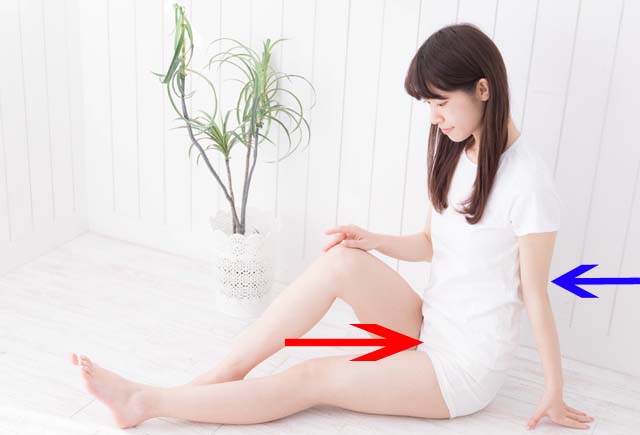
With a dildo inserted and you leaning in the pictured posture, the red arrows show the direction of body weight pressing forward, while the blue arrows indicate the resistance provided by the wall — this combination makes it easier to press the deep vaginal area (the portio) and gives a comfortable posture.
As you press more weight in the red-arrow direction, the vagina’s deep area (including the portio) becomes compressed between the pushing force (red arrows) and the resisting wall (blue arrows). If you feel pain at any point, stop immediately.
How the contact feels varies depending on how developed the area is, but some women describe sensations like:

A dull, pounding ache — kind of painful.

A little painful, but maybe pleasurable.
The portio’s texture and sensation differ from person to person, so it helps to locate and explore it for yourself to get a sense of where it is. You may feel discomfort at first; take your time and stimulate slowly until you get used to it. Gradual, patient development is the key to achieving pleasurable sensation — the portio is not a zone that instantly becomes pleasurable after one session.
Be patient and allow pleasure to develop slowly.
Comprehensive Guide to Portio(Cervical Erogenous Zone) Development

From here, we’ll explain how to develop the portio on your own.
When the portio becomes an erogenous zone, it’s possible to experience deeper, more continuous pleasure than typical internal orgasms achieved via the G-spot.
Recent international research has shown that the cervix contains sympathetic, parasympathetic, and sensory nerves.3 This suggests that stimulation near the cervical area, including the portio, can influence sexual responsiveness.
Even during partnered sex, if a partner’s penis reaches the portio comfortably, it can produce deep, ongoing internal orgasmic pleasure.
It’s ideal to experience this together with a partner you love!
Understanding the Location and Getting Used to the Sensation
Because the portio’s location varies between individuals, it’s important to understand your own.
As mentioned earlier, the portio is located deep in the vagina near the cervix.
Due to its depth, it’s often unreachable with fingers, so using a dildo is the most efficient way to explore.
Unlike the G-spot, which responds to rubbing or pressing, the portio is more sensitive to deep compression rather than surface contact.
The position remains in the deep vaginal area as explained previously.
Unfortunately, men with shorter penises usually cannot reach the portio!
When you first begin developing the portio, you may experience discomfort or a sensation similar to needing to urinate.
As you continue stimulation, you may start noticing changes such as:
It might feel a little painful but also pleasurable.

Being pressed there feels good.
If you feel these shifts from discomfort to pleasure, it’s a sign that development is taking effect.
Stimulation Techniques and How to Perceive Pleasure
It’s dangerous to start with strong stimulation.
Overly aggressive stimulation can cause bleeding or soreness lasting 2–3 days. In such cases, you cannot continue development and may even need to see a clinic.
To prevent this, start gently.
Try inserting and withdrawing slowly, giving light taps to the portio, or maintaining a deep insertion with gentle pressure.
Although it takes time, continuing this kind of stimulation helps you “catch the waves” of pleasure — a sign that development is progressing.
Once you reach this point, continuing stimulation can lead to even stronger pleasure.
The following video shows a real experience of a woman who came to Lips and developed her portio, experiencing full-body convulsions and screaming in pleasure.
Pay attention to the intensity of her moans and convulsions as a reference.
Relax, Take Your Time, and Enjoy
Avoid portio training when you’re not in the mood (e.g., low sexual desire).
Instead, try to reach a state where your sexual desire is awakened naturally.
International studies show that vaginal and clitoral sensitivity increases during sexual arousal.4
Being fully naked can also help, although some may prefer only removing lower garments — a little embarrassment is part of the experience.
Other options include using erotic videos or manga, or even filming yourself during masturbation to heighten arousal.
Accept your own erotic side as you develop the portio(Cervical Erogenous Zone).
Imagining scenarios with female-oriented erotic videos or sensual novels can also help enhance arousal.
When stimulating the portio, using a vibrator or dildo to locate your pleasure points is recommended. Once you find the spot, combine it with clitoral stimulation.
Be careful not to climax from clitoral stimulation if your goal is internal orgasm.
If you feel like you’re about to orgasm from the clitoris, pause stimulation and focus on the portio to encourage internal orgasm.
Using a Dildo
The best toy for portio development is a dildo.
Because the portio is located deep in the vaginal canal, a dildo designed for deep insertion reaches the portio most effectively.
Choose a dildo that matches your vaginal size.
For example, a popular choice among Japanese women is shown below:
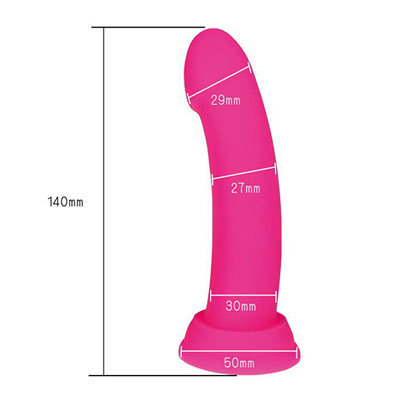
Using a dildo with a suction base, like the Orica Pink Dildo, allows you to secure it to the floor, making it possible to practice while riding it.
For portio development, a moderately sized dildo is preferable — too large may cause discomfort.
Made from premium safe silicone, it’s gentle on the skin and hygienic.
The Orica Pink Dildo can be purchased from LoveTrip for 3,610 JPY (tax included).
Don’t forcefully insert it deep from the start — this can cause pain.
If you naturally produce little lubrication or feel a stinging sensation, use a vaginal-specific moisture gel.
Start with the shallow insertion until it begins to feel pleasurable, then gradually focus on deeper insertion.
Individual response times vary, but three months is a reasonable target.
Using a Vibrator
If a dildo is difficult to get used to, a vibrator can also work.
Vibration functions are generally designed for internal orgasms, but for portio development, vibration may not be ideal.
Initially, it may feel intimidating, but many vibrators have diverse vibration settings, and some women become absorbed in the sensation.
For women who are not yet fully accustomed to internal orgasms, or who require some vibration, start with a vibrator and gradually transition to a dildo.
A vibrator with sufficient length and diameter is recommended for this purpose.

The Marine Beans vibrator, designed for internal orgasms, can also be used for portio development once you turn off the vibration function.
It has an insertable length of over 10 cm, suitable for deep vaginal stimulation.
This video shows me using the Marine Beans vibrator to develop a woman’s portio at Lips.
After insertion, stimulation focuses deeper toward the portio. By mid-video, she experiences deep internal orgasms, expressing herself continuously.
At the end, in a rear-entry position, she continues experiencing pleasure while deep stimulation is maintained.
Excited and overwhelmed by pleasure, she ultimately expresses sexual desire verbally.
The testimonial from this participant is included below.

Understanding Your Own Portio Characteristics
There are individual differences, but in some women, the portio may descend slightly during sexual arousal or stimulation.
In such cases, it becomes easier to stimulate and develop the portio during sex.
For example, one method is to achieve an internal orgasm (G-spot orgasm) first during sex, and then have your partner stimulate the portio afterward.
Incorporating Vaginal Training
Vaginal training, formally known as pelvic floor muscle training, strengthens the muscles around the vagina.
This can enhance vaginal sensitivity and make portio stimulation more effective.
Research from international physiotherapy departments has reported that women with stronger pelvic floor muscles experience higher satisfaction from internal orgasms.5
Additionally, beyond sexual function improvement, vaginal training can help prevent or improve urinary incontinence and support pelvic organs, offering multiple health benefits.6
Vaginal training involves simple exercises of contracting and relaxing the vaginal muscles in coordination with your breathing.
Incorporate it gradually according to your physical condition and goals.
Finding a Partner Who Can Stimulate Your Portio(Cervical Erogenous Zone)
While self-development through masturbation is possible, it’s generally less efficient and more laborious.
If your partner’s penis reaches the portio, portio development can be much more effective.
Conversely, if the penis cannot reach the portio or its shape and size are not compatible, developing the portio can be difficult.
Finding a compatible partner is not always easy.
For women aiming to experience internal orgasms, one option is to apply to the sexual wellness service “Lips,” where I, h-i, personally guide portio development.
I have helped over 500 women achieve internal orgasms and develop their portio.
You can check testimonials from women who experienced multiple internal orgasms with Lips here:
>> “Lips” Internal Orgasm Testimonials
The article below contains screenshots and feedback from women who have experienced Lips sessions (posted with their consent).

Important Precautions for Portio(Cervical Erogenous Zone) Development

The vaginal canal is highly delicate, and the portio is located deep inside.
I can’t tell where it is even when I search.
I don’t feel any pleasure at all.
For these reasons, aggressively probing deep inside the vagina is very dangerous.
Research from international universities has also reported individual differences in sensation at the cervix, including the portio.7
Stimulating the portio is ideally performed by experienced practitioners or partners familiar with female sexual response, like myself.
When exploring or stimulating your own portio, proceed with the utmost care.
Below, we explain specific precautions and considerations for safe development.
Don’t Force Portio Exploration on Unclear Days
The portio’s location may vary slightly depending on your menstrual cycle or daily condition.
There are days when it is difficult to locate.
This does not mean the portio has disappeared; rather, local sensitivity may be reduced, or its position may be temporarily harder to detect.
It felt good before, but something feels off today…
Forcing stimulation under such conditions may injure the cervix.
The UK NHS warns that “very deep penetration or insertion of objects may cause cervical injury.”8
Take a break and try again another day.
Stop if You Experience Strong Pain
As mentioned, an underdeveloped portio may cause pain or extreme urinary sensations.
Ideally, an experienced partner should guide development. Do not overdo self-stimulation.
It often takes time before sensations shift to “painful-pleasure.”
Avoid Vaginal Stimulation If Bleeding Occurs
Some women are prone to vaginal bleeding due to sensitivity, hormonal factors, or minor causes.
Fresh bleeding resembling a cut requires caution, even if it is not harmful like menstrual flow.
Blindly stimulating the deep and delicate portio may cause bleeding.
Similarly, overenthusiastic stimulation when pleasure increases can lead to unexpected bleeding.
Summary
Developing the portio as an erogenous zone allows women to experience deeper, more intense internal orgasms.
Although it may seem simple, portio development often requires time even for women who already experience internal orgasms.
For self-development, use this guide to accurately locate and stimulate the portio to enhance sexual pleasure.
Women who want hands-on guidance are encouraged to apply to Lips for professional support.
References
This article includes expert research on female orgasms and sexual response:
- Anatomy of the Female Pelvis | SEER Training ↩︎
- MRI Analysis of Vaginal Shape and Length (University of Michigan)
Changes in the vagina during sexual arousal (University of Groningen) ↩︎ - Cervical Nerve Structure Review (2023) ↩︎
- Study on Sensitivity Changes of Female Genitalia During Sexual Arousal ↩︎
- Pelvic Floor Strength and Female Sexual Function ↩︎
- Pelvic Floor Muscle Training for Urinary Incontinence (Cochrane Review) ↩︎
- Study on Cervical Nerve Structure and Distribution (Rennes University Hospital) ↩︎
- NHS Guidelines on Dyspareunia and Difficult Penetration ↩︎
Notes
- This illustration is sourced from the “Anatomy of the Female Pelvis” page in the SEER (Surveillance, Epidemiology, and End Results) Training Modules, operated by a U.S. government agency. The site is an educational resource published by the National Cancer Institute (NCI), which oversees national cancer registries and epidemiological research in the United States.
- According to MRI-based anatomical research on adult women, the average length of the anterior vaginal wall is reported to be approximately 6.3 cm, and the posterior wall approximately 9.8 cm in a non-aroused state. Another study conducted by the University of Groningen observed that during sexual arousal, the anterior wall tends to lengthen by roughly 1 cm.However, the sample size was limited, and a wide degree of individual variation was noted. For this reason, the values presented here consider that vaginal elongation during arousal is generally modest?typically up to around 1 cm?and varies significantly between individuals.
- This statement is based on a 2023 review article compiled by researchers from the Department of Anatomy and Biomedical Sciences at a university in Kingston, Canada. The review summarizes the latest anatomical findings on the nerves distributed in the uterine cervix, reporting that sympathetic, parasympathetic, and sensory nerves are intricately involved.These findings provide medical support for the possibility that stimulation around the cervical region may influence female sexual response.
- A study conducted at the Rambam Medical Center in Israel confirmed that vaginal and clitoral sensitivity increases during sexual arousal.
- A 2014 clinical study by the Department of Physiotherapy at the Federal University of Pampa (Brazil) examined the relationship between pelvic floor muscle strength and the ability to achieve internal orgasms. The researchers reported that strengthening the pelvic floor muscles may enhance sexual pleasure.
- This is a systematic review by the internationally recognized Cochrane Collaboration, which evaluated pelvic floor muscle training as an effective treatment for women with stress or mixed urinary incontinence compared with no treatment or control groups.
- The explanation is based on research from Rennes University Hospital, which suggests that the density and distribution of nerves in the uterus and cervix vary among individuals, potentially contributing to differences in sensation and sexual responsiveness.
- This material was created by the UK’s National Health Service (NHS) and provides explanations of the causes of painful intercourse and penetration difficulties, along with recommended management strategies.