
Women who dream of deeper pleasure ? this is for you.
When it comes to “enjoying sex,” being able to orgasm from internal stimulation (sometimes called a “vaginal orgasm”) can totally change how you experience your sexual life. Surprisingly, many women have never felt this kind of orgasm ? they worry because they “just can’t orgasm inside.”
At our wellness studio Lips, we receive consultation after consultation from women who’ve struggled for years, unable to achieve an internal orgasm. Over time, we have helped more than 500 women reach that kind of orgasm. Many of them keep coming back, which warms our hearts and shows us how important this is.
In this article, I share exactly how women can develop the ability to orgasm internally, based on my experience guiding those 500+ women. I want to explain it as simply, clearly, and concretely as possible.
Honestly, once you grasp a few key techniques, even women who’ve lamented for years “I can’t orgasm inside…” can learn to do it. If you’ve been struggling, treat this page like a workbook ? read it over again, use it for mental imagery, and build up your practice.
- What Does “Internal Orgasm” Mean?
- How to Develop Internal (Vaginal) Orgasm
- Creating the Right Mental Space
- Developing Internal Erogenous Zones
- Trying Out At Our Studio (Lips)
- Finding Positions That Feel Good
- Pelvic Floor Training (Kegel Exercises)
- Using Toys (Vibrators or Dildos) During Masturbation
- Possible Reasons Why You’re Not Orgasming Internally
- Physical Factors
- Mental / Emotional Factors
- Other Factors (Compatibility, Health, etc.)
- Mindset & Precautions When Developing Internal Orgasm
- Frequently Asked Questions
- Summary
What Does “Internal Orgasm” Mean?

“Internal orgasm” (sometimes called a “vaginal orgasm”) refers to a type of orgasm that comes from stimulation inside the vagina — especially from the vaginal walls or deeper areas. Unlike a clitoral orgasm (which comes from external stimulation of the clitoris), internal orgasm is often described as a slow-rising, deeply internal pleasure.
A lot of confusion surrounds internal orgasm — many people wonder:
At Lips, we hear things like:

Is internal orgasm just an urban legend?
Here’s the truth: internal orgasms are real. But they don’t happen in the exact same way for everyone. Factors such as your body, the location of sensitive areas, your mental state, and your relationship with your partner all play a role. Also, there’s no “correct” or “better” way to orgasm ? internal doesn’t mean superior to clitoral, and clitoral doesn’t mean immature.
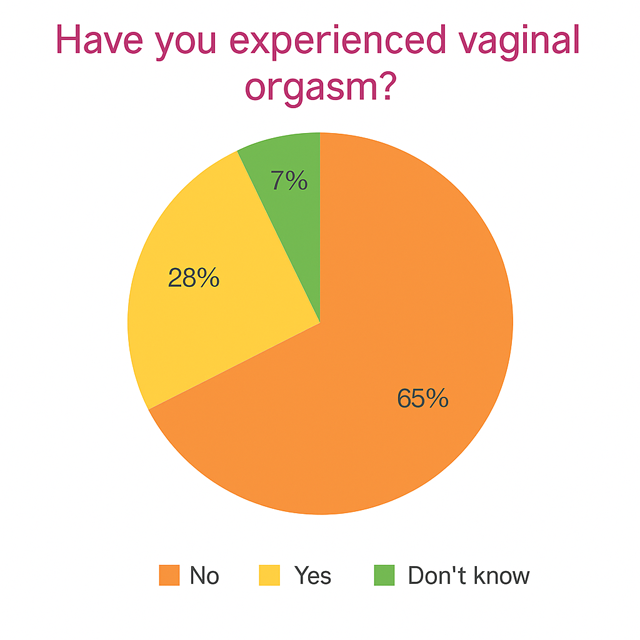
Based on data from research in Japan (averaging surveys by Durex, MORE, and iroha)1, more than 65% of women report never having experienced internal orgasm. That’s a majority. Similar trends appear in global studies too ? internal orgasm is not something everyone experiences naturally or quickly.

Please don’t worry — not being able to orgasm inside right away is totally okay!
How to Develop Internal (Vaginal) Orgasm

Clitoral orgasms (“clitoral orgasm”) are relatively easy to achieve because the clitoris is externally accessible. But for internal orgasm, you need to identify and stimulate internal erogenous zones in the vagina ? namely, the “G-spot” and the “cervical spot” (sometimes called “portio”).
You also need to teach your body and brain: “This is what internal orgasm feels like.” Over time, that awareness becomes real.
Here are concrete, step-by-step methods for self-development so you can (eventually) orgasm internally.
Creating the Right Mental Space
Whether you’re masturbating or having sex, your mental state has a huge impact on how much pleasure you feel. Research has shown that a woman’s sexual response isn’t just about physical stimulation ? feelings of safety and emotional connection strongly influence arousal.2
To make things easier for yourself:
It’s important to create an environment where you can feel free and express your sexy side.
Remember, vaginal orgasm development takes time. It’s not something you learn overnight. If you hurry, you might make it harder. Be patient, take your time, and try to enjoy the journey.
Some women reach internal orgasm in just one session at our Lips studio.
Many ask:
How long should I expect it to take before I can do it?
The honest answer is: it depends on the person. Some women do experience internal orgasm in their very first session. Even if you don’t, I can help you identify what’s missing and how long it might take, based on where you are now.
Developing Internal Erogenous Zones
Everyone’s sensitivity is unique, but by stimulating certain areas inside the vagina, you can help your body develop new pleasurable zones.
G-Spot Development
First, we focus on the G-spot. While there’s debate among scientists about whether it exists clearly for all women, many women do feel pleasure when that zone is stimulated.
If you’re nervous about jumping straight to toys, you can start with your fingers ? treat it like “vaginal self-exploration.” Try to masturbate in a way that consciously stimulates inside your vagina. Once you start feeling internal sensations, keep gently exploring so that your brain and body remember what feels good.
If you can feel where your internal erogenous zones are, that’s a sign that your internal orgasm development is working!
During masturbation or sex, deliberately focus on that internal stimulation. Once you begin to feel pleasure from your G-spot, you’ll be ready to move on to deeper development.
For detailed instructions on how to develop your G-spot, please refer to the article below.

Portio (Cervical Area) Development
After you’ve gotten comfortable with G-spot stimulation, you may try to explore the portio ? the area around the cervix, deeper inside.
Danger: Not everyone experiences intense pleasure from stimulating the portio, and because it’s deep, there’s a risk of injury (e.g., cervical irritation) if you’re not careful.3
This is more advanced ? don’t push yourself too hard until you feel comfortable.
For detailed instructions on how to develop a Cervical Erogenous Zone, please refer to the article below.

Trying Out At Our Studio (Lips)
Some women try these techniques on their own, but find that they can’t quite make progress by themselves. If that sounds like you, you might consider applying to Lips, our women-only sensual wellness studio.
During a session, we help you identify and develop your internal erogenous zones (G-spot, portio) ? and we explain as we go. We also give you a clear assessment of how far along you are and how to continue. You can read real testimonials from women who have experienced internal orgasm through Lips here.
If you’re curious, please check our studio page , then decide if you want to apply. After our sessions, many women kindly allow us to share their feedback (safely anonymized); you can see screenshots of their messages in our article.
I hope this helps as you decide whether to apply!
Finding Positions That Feel Good
Sex positions matter more than many people realize, especially when you’re learning to orgasm internally. Even if you get used to internal orgasms, you might find that you need a certain position to do it.
When you’re still exploring, it’s helpful to know which positions feel good to you. Many women find that positions where penetration is deeper ? like doggy-style (from behind) or a “scissors” style ? work better for reaching internal orgasm. But, of course, everyone is different.
Sometimes with a partner, doggy-style can hurt, or just not feel right.
With the right chemistry—especially when your partner is able to stimulate your G-spot or portio accurately ? even “missionary” (face-to-face) might work.
Discover which positions feel good for you, and incorporate them into sex so you can enjoy deeper pleasure.
Pelvic Floor Training (Kegel Exercises)
Strengthening your pelvic floor muscles (so-called “kegel exercises”) can improve sexual satisfaction, and research suggests that women with stronger pelvic floors have a higher success rate of internal orgasm.4
Here’s a simple way to do it at home:
- STEP1Find your pelvic floor muscles
Imagine stopping your urine mid-flow—those are the muscles.
- STEP2Get into a relaxed posture
Sit or lie down comfortably, straighten your back, breathe evenly.
- STEP3Contract the muscles
Squeeze your pelvic floor muscles and hold for 5 seconds. Be careful not to tighten your buttocks or thighs.
- STEP4Relax
Let go and rest for 10 seconds.
- STEP5Repeat
Do 10 cycles (contract + relax) = one set. Do about 3 sets per day. As you get stronger, you can hold longer.
Use idle moments — like watching TV or scrolling on your phone — to practice.
Using Toys (Vibrators or Dildos) During Masturbation
If you usually finish quickly by using a wand (a powerful “denma” or clitoral vibrator) or a small bullet vibrator, try switching to toys you can insert: a vibrator with a clitoral stimulator, or a dildo.
Start with a vibrator that has a clitoral stimulator attached. This lets you connect clitoral pleasure with internal stimulation. Gradually, once you’re more comfortable, you can try a dildo.
According to an anatomical study by a female urologist from Australia (who specializes in pelvic and genital anatomy), internal orgasm may involve the “deep” part of the clitoris.5
At Lips, we often recommend the “Marine Beans” vibrator:

It’s sold as a starter set (vibrator + lubricant sample + batteries) for around ¥5,950 on Amazon website.
Once you feel comfortable with a clitoral/vaginal vibrator, you can try a dildo, which typically has no vibration and offers a more “realistic” feel. Mastering internal orgasm with a dildo often translates well into sex (depending on your partner’s anatomy).
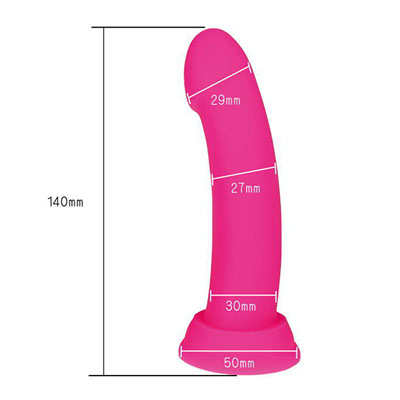
Modern beginner-friendly dildos can be cute, bendable, and have suction bases so you can explore your internal sensations hands-free (like in a rider position). The one we like is about 14 cm total length, 12 cm insertable, 3 cm in diameter, and costs around ¥3,610 (from LOVETRIP official website).
Possible Reasons Why You’re Not Orgasming Internally
As we’ve covered, internal orgasm isn’t just about stimulating inside — how developed your sensitive zones are, your physical condition that day, and your mental state all matter. Some barriers are physical, some mental, and some are about compatibility.
If you’ve been doing the exercises and still feel like nothing’s happening, maybe one of the following is getting in your way.
Physical Factors
Developing your internal erogenous zones (G-spot, portio) accounts for about 80% of what makes internal orgasm possible. If those areas haven’t really developed, simply wanting internal orgasm is not enough.
Another factor: if you’re used to clitoral orgasms, your body might be “stuck,” making it harder to shift focus to internal sensations. Clitoral and internal orgasms feel very different — try stepping back from clitoral stimulation for a while and redirect your attention inward.
Also, developing internal orgasm isn’t “wrong” just because you enjoy clitoral orgasms — scientific research suggests that private clitoral anatomy (i.e., internal structures) is deeply involved in internal orgasm too.⁵ From our experience with hundreds of women, clitoral stimulation remains important in developing internal orgasm.
Mental / Emotional Factors
As touched on before, shame, self-judgment, or feelings like “Isn’t this silly?” or “I should feel something by now…” can get in the way. If these kinds of doubts come up often, they might be blocking your progress.
If emotional issues are a barrier, it helps to relax, release control, and focus on pleasure rather than thinking too hard.
Key mental states to cultivate: mood, emotional openness, and sexual desire — these three play big roles in any sexual experience, internal orgasm included.
Other Factors (Compatibility, Health, etc.)
Some women face what’s clinically referred to as female sexual arousal disorder or female orgasmic disorder. These can involve a mix of physical and psychological factors. Physically, things like poor blood flow or nerve issues can interfere. Psychologically, past trauma, mental health struggles, or pressure from a partner may be part of it.
Mindset & Precautions When Developing Internal Orgasm

Developing internal orgasm isn’t just about technique — how you approach it mentally, and what you avoid, is just as important.
Be patient
This doesn’t normally happen overnight. Sensitivity, mental readiness, and your body’s unique structure all mean that progress varies.
Avoid pushing too hard
Trying to force internal orgasm (“I have to do it”) can backfire — tension dulls sensation.
Relax your body and mind
Especially with a partner, feeling safety and connection is essential. Avoid “I have to cum now” pressure.
Don’t compare
On social media or blogs, you may read “Every time I orgasm inside” — but everyone’s body and pace are unique. What matters is tuning into your sensations.
Build trust with your partner
Because internal stimulation goes deep, emotional safety matters a lot. Talk openly, take your time, and practice positions that feel good for you.
Avoid rough or forceful stimulation
The deeper parts of the vagina (like portio) are sensitive. If you feel pain or unusual discomfort, stop. Progress should be guided by pleasure, not force.
Accept that your sensations may change
What feels amazing one day may feel different another. Hormones, stress, your cycle, and how “developed” you are all influence how you feel.
In a physiological study from Israel, researchers found that sensitivity in the vagina and clitoris increases when a woman is sexually aroused.6 This shows how important mental and physical arousal are when learning new kinds of pleasure.
Don’t expect scary “head-blanking” orgasms or full-body convulsions right away. In early stages, internal stimulation may only feel like mild pressure or a little urge. And if you do orgasm alone, it may not feel as intense as when a partner is involved — and that’s okay.
Your level of excitement, how “developed” your internal zones are, and your emotional comfort all influence how internal orgasm feels.
Frequently Asked Questions

Here are some common questions we receive at Lips, along with our honest answers:
- QIf I apply for a session at Lips, will I definitely orgasm inside?
- A
We can’t guarantee that you’ll have an internal orgasm on the same day, but working with us will absolutely bring you closer to that goal. If self-development feels stuck or confusing, a guided session can help you feel and experience things you couldn’t on your own. Many women do reach internal orgasm in just one day. Please check our testimonials:
- QWhat’s the difference between internal (vaginal) orgasm and clitoral orgasm?
- A
Clitoral orgasm comes from external stimulation of the clitoris — sharp, pinpoint, powerful sensations. Internal orgasm, on the other hand, comes from inside the vagina (G-spot, portio, etc.) — it’s deeper, more “inside your body,” and often slower and more spreading. Neither is “better”; it’s about what feels right for you.
- QWhat should I do first if I want to aim for internal orgasm?
- A
Start by exploring your own body — find what areas feel good, how strong stimulation should be, and where inside you feel pleasure. Then gradually work on developing your G-spot and/or deeper internal zones, at your own pace. Take your time.
- QIs not being able to orgasm inside a sign that something is “wrong” with me?
- A
Not at all. There’s no abnormality just because you haven’t found internal orgasm yet. It involves both physical sensitivity and emotional readiness. Often, internal orgasm is less about “you being broken” and more about “you haven’t discovered what works for you yet.”
- QCan I orgasm internally through masturbation?
- A
Yes. Many women use insertable toys (vibrators, dildos) to self-develop their internal erogenous zones. Just be gentle — too much force can cause discomfort or even pain. Use arousal, not pressure, as your guide.
Summary
A surprising number of women want internal (vaginal) orgasm, but they don’t know how to achieve it — or they feel lost in all the information online. At Lips, we hear you. Through this guide, I hope you can take the methods I’ve used with hundreds of women, apply them in solo or partnered sex, and gradually build internal sensitivity.
Developing internal orgasm means strengthening your internal erogenous zones and cultivating a relaxed, trusting mental state. Trust yourself, trust your partner, and enjoy the process as you explore deeper pleasure.
References
Here are the sources I used (studies and expert research):
- A survey of orgasm experience among Japanese women (averaging data from Durex, MORE, and iroha). FrontRow article. ↩︎
- Research on women’s sexual desire and emotional connection (Dr. Rosemary Basson, 2001). ↩︎
- Study on nerve distribution of the cervix and uterus, suggesting individual variation in portio sensitivity. ↩︎
- Clinical research (2014) on the strength of pelvic floor muscles (“kegel strength”) and women’s sexual function. ↩︎
- Anatomical research by Dr. O’Connell (Australia) on clitoral internal structure, showing links between clitoris and vaginal sensation. ↩︎
- A physiological study (Israel) showing that vaginal and clitoral sensitivity increases during sexual arousal. ↩︎
※ The references above point to international, peer-reviewed research — not just Japanese media — so they are also relevant for a global audience.